
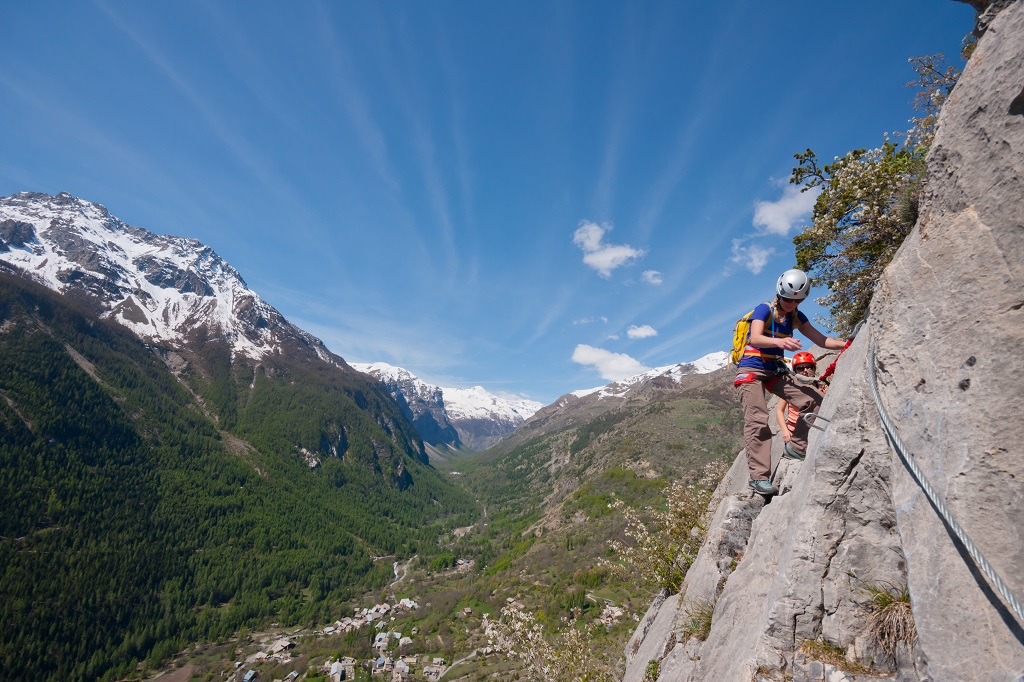
Fairly Difficult Via Ferrata (AD)
Description
Length: 600 m
This via ferrata climbs directly up the cliff, always heading to the right, alternating between slabs, cracks and a few chimneys. Several ledges facing to the right provide safe places to rest and enjoy the superb views over the Freissinières Valley.
Equipped only where necessary, this route requires you to rely heavily on the rock and, in some sections, even on the cable. Some climbing experience is therefore recommended.
An escape route is available.
Access: From the village of Freissinières, continue towards Col d’Anon. Park at a left-hand bend where there is a sign. Follow the well-marked trail to the start of the via ferrata.
Return: 1 hour. Take the trail that runs through the cliff.
- Towns crossed : Freissinières
Equipment
Helmet
Harness
Via ferrata lanyard with two locking carabiners and an energy absorber
If in doubt, seek advice from professionals such as mountain guides or equipment rental specialists.
Sensitive areas
Peregrine falcon
- Impacted practices:
- Aerial, Vertical
- Sensitivity periods:
- FebMarAprMayJun
- Contact:
- Parc National des Écrins
Julien Charron
julien.charron@ecrins-parcnational.fr
Recommandations
Please remember to take all your rubbish with you.
Wear suitable footwear with good-grip soles, as some sections of the rock can be very polished and slippery.
3 points of interest
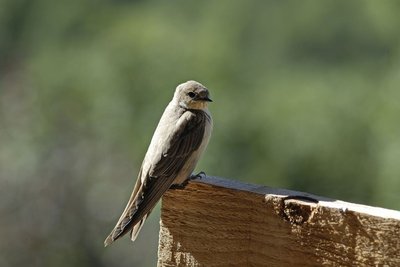
Hirondelle de rocher - Mireille Coulon - Parc national des Écrins  Fauna
FaunaThe crag martin
The birds that are constantly swooping around the cliff are crag martins. They are brown with a beige underside. They have built their nests under small overhangs. This species is very common in the Alps. Partially migratory, crag martins return to the Mediterranean coast in winter, where they join resident populations. So it is the first bird to reappear in the valleys of the Pays des Écrins in late February and the last to leave in October!
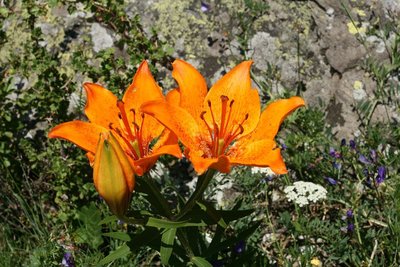
Le lys orangé - Marie-Geneviève Nicolas - Parc national des Écrins  Flora
FloraThe fire lily
In June and early July, the rocks are brightened up here and there by large orange flowers: the fire lily is a splendid plant which grows in the mountains of Europe. It grows in rocky or bush-covered terrain and even - why not? - right on the cliff faces, in dry areas. It is a protected species.
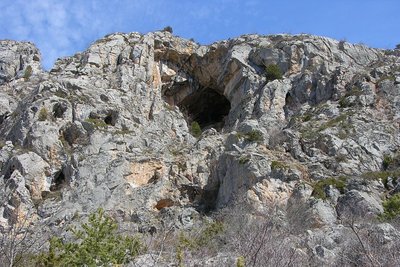
Grotte des Vaudois - Thierry Maillet - Parc national des Écrins  History
The Grotte des Vaudois - The Waldensians' Cave
The history of Freissinières is linked to that of the Waldensians, who found refuge in this valley and in other Alpine valleys in the thirteenth century. The followers of this religious movement - which later embraced the reformation - were deemed to be heretics and therefore persecuted. This cave, in which Waldensians sought refuge after being taken by surprise, witnessed massacres perpetrated by the Inquisition.