
Day 2 : Narreyroux Loop
Description
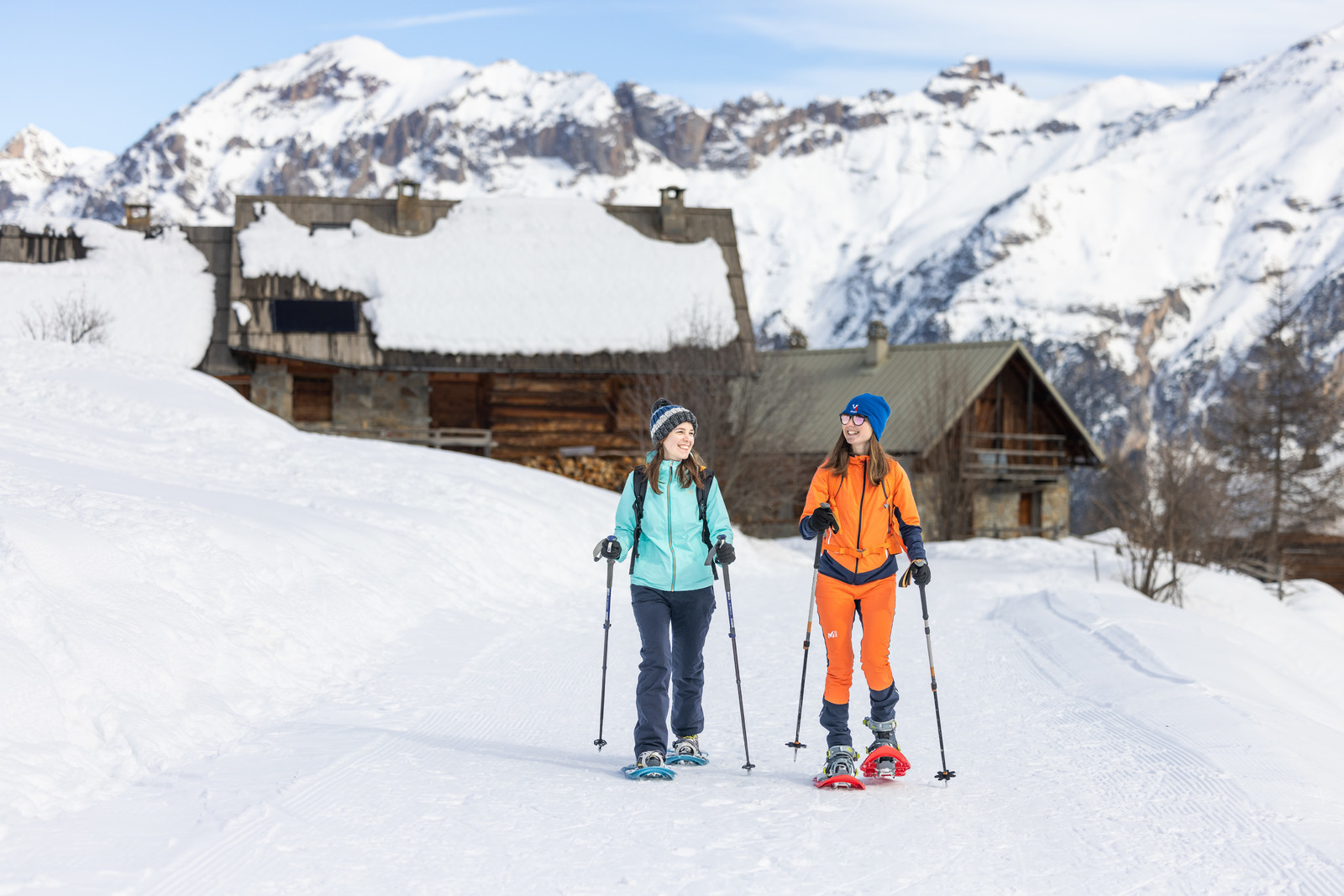
For your second day, you’ll explore the wild Narreyroux valley—a unique opportunity to make your own trail while spotting traces of mountain wildlife.
You’ll come across a charming alpine hamlet, the perfect spot for a picnic break. The route takes you through meadows and forests, offering a beautiful variety of landscapes to enjoy throughout your hike.
To reach the start of the trail, take the B shuttle line to the Maison du Miel stop. From there, the path begins along the road leading to the hamlet of Narreyroux. Simply follow the marked route.
For the return, take the same B shuttle from Maison du Miel back to your accommodation.
- Towns crossed : Puy-Saint-Vincent
Gear
→ Make sure you have the necessary equipment:
Water and snacks
Warm clothing (avoid jeans)
Sturdy high-top shoes (hiking boots or rigid snow boots)
Walking poles
Sunscreen
Sunglasses
Hat or cap
Small first-aid kit
Sensitive areas
Black grouse - winter
- Impacted practices:
- , Land
- Sensitivity periods:
- JanFebMarAprDec
- Contact:
Black grouse - winter
- Impacted practices:
- , Land
- Sensitivity periods:
- JanFebMarAprDec
- Contact:
- Parc national des Ecrins - 0492402010
Black grouse - winter
- Impacted practices:
- , Land
- Sensitivity periods:
- JanFebMarAprDec
- Contact:
ONF 05 - Maillet Thierry
Recommandations
→ You follow these routes under your own responsibility.
Never go out alone, or at the very least, inform someone of your plans and route beforehand.
Leaving the marked trail is strongly discouraged—it may compromise your safety and is at your own risk.
Do not rely on existing tracks left by other hikers for navigation; use only the official directional signs and markers.
You are moving through a fragile natural environment—please help protect it by staying on marked paths and taking all your waste back with you.
Check the weather forecast and avalanche risk published by Météo France before setting out.
Be aware that weather in the mountains can change rapidly. If visibility deteriorates, turn back and postpone your outing.
Avoid approaching wildlife if you encounter any—additional stress or movement can threaten their survival through the winter.
You can also seek advice from local tourist offices or the Nordic chalet before departure.
Emergency number: 112
13 points of interest
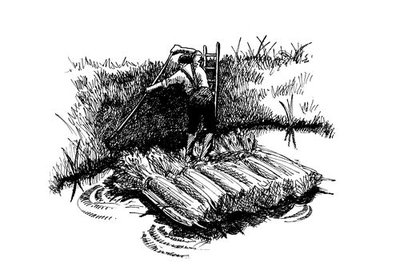
Rouissage du chanvre - PNE  Know-how
The chenevières, hemp fields
There is a French saying «Avril donne le fil», meaning that April is string time. Sown in spring after the last frosts, the tall stems of hemp grow in tiny plots of ground, called chenabiers or chenevières. The hemp is cut at the end of August and the strands are immediately immersed in large holes filled with water - called the naïs - on the edge of wet meadows. They are left to steep for more than a month, in order to release all the gum that binds the plant fibres together.
Paysan des hautes vallées - PNE Know-howHemp production
At one time, almost every winter evening would be taken up by stripping the fibre from the hemp straw. The strands had to be broken one by one, to remove the long, flexible filaments. Once washed and combed, these «balls» of hemp were taken to the rope and yarn spinners to be turned into rope, blankets and cloth for garments. When a family ordered cloth from the weaver, the entire family would go to the loom to attach the threads onto the warper.
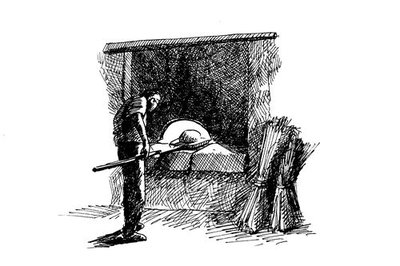
Le four banal - PNE  Architecture
The commons
As «crosswise» as it might be, from end to end the main street of Puy-Saint-Vincent has every building the community needs. The mill is still here, complete with its intake and outlet mill races. The communal oven is lit on 14 July every year. It has just been restored and shares the little paved square with a lovely water fountain, made from wood and ringed with iron.
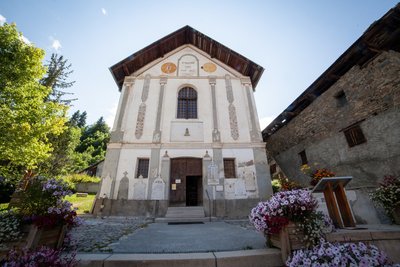
L'église Sainte-Marthe - Marie Lachaud  History
The church of Sainte-Marthe
The church of Sainte-Marthe was built in the nineteenth century, in 1817 to be precise, as indicated at the top of the pediment. The inside and the main facade has a painted decoration. On two superimposed levels and on the gables, pilasters or false pillars frame either bay windows illuminating the nave, or panels painted with a false marble decoration. A few steles remind us of the present of the former cemetery. Included on the Supplementary Inventory of Historical Monuments, this church also contains a commemorative plaque honouring those who fell in the First World War.
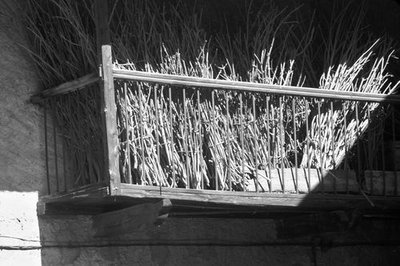
Séchage des fagots au balcon - PNE ArchitectureSolid architecture
Originally, the environment of the high valleys of the Pays des Écrins offered little space, in which men and animals cohabited. Unlike in Vallouise, where the architecture is a harmonious blend of arcades and decorative elements, the houses in Le Puy retain the rusticity of completely stone-built single block construction with half-hipped roofsprotruding over a drying balcony. This roof extension protects the main facade from bad weather, snow in particular. People can move about under shelter and the firewood store stays dry all winter. This barrel vaulted porch, which shelters the entrance to the main building and the stable, mirrors the Champsaur-Valguademar, «toune» (ground level arcade).
 Architecture
Protective shelter
Separate from the main building and at a distance from the barn, some property owners also have a small building providing safety from the much feared home fires. Here, in the coolness of this outside cellar, they stored ham, cheeses, flour, salt and other foodstuffs, but also whatever the family owned by way of valuables.
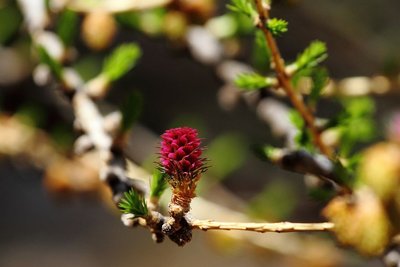
Mélèze en fleur - Christophe Albert - Parc national des Écrins  Flora
FloraThe larch forest
The symbol of the Southern Alps, this softwood tree loses its leaves in winter. Perfect adaptation to winters in the high mountains: being leafless, the branches are better able to withstand the weight of the snow. Arranged in little clusters, the leaves are a soft green in the spring and golden yellow in the autumn. It is a pioneer species which needs light in order to grow. It provides mankind with a source of pasture for the flocks and a strong and rot-proof construction material.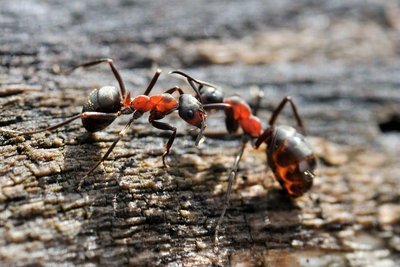
La fourmi rousse des bois - Mireille Coulon - Parc national des Écrins  Fauna
FaunaThe red wood ant
The nest of the red wood ant is made from conifer needles, dry grass and earth. It is home to between 200,000 and 500,000 ants! It gives of an odour of vinegar, due to the formic acid, a substance sprayed by the ants as a defensive mechanism. Inside the nest, the worker ants each have their own task. In early summer, a large number of winged ants fly from the nest: these are males who will only live for a few days, enough time to reproduce, and a few new queens.
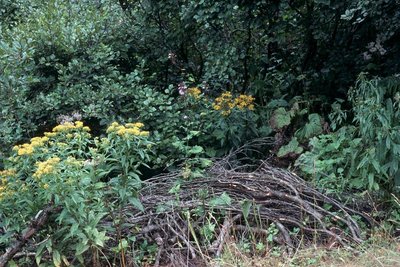
Adénostyles à feuilles d'alliaire et séneçons de Fuchs dans la mégaphorbiaie et l'aulnaie verte - Bernard Nicollet - Parc national des Écrins FloraThe "megaphorb"
The "megaphorb" is a combination of mega-plants which establish themselves in places where the soil is permanently damp, deep and nutrient-rich. The adenostyles alliariae, the alpine sow-thistle, the masterwort or false benjoin and the tansy-leaved rocket are among them.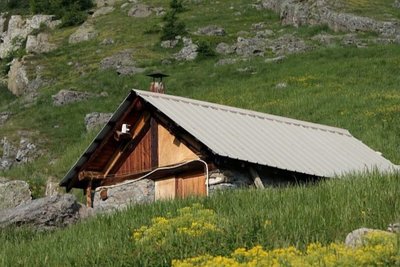
Cabane de Narreyroux - Thierry Maillet - Parc national des Écrins  Vernacular heritage
The mountain habitat
The houses here were once built with local materials: stone and larch wood. They are roofed with shingles rather than the lauze (flat stone) commonly seen in other mountain regions. The hamlet of Narreyroux was a high mountain hamlet within the the municipality of Puy-Saint-Vincent. In fact, one of the chalets is still used as a shepherd's cabin, before the flock moves up the valley floor where the Grands Plans shepherd's cabin is situated.
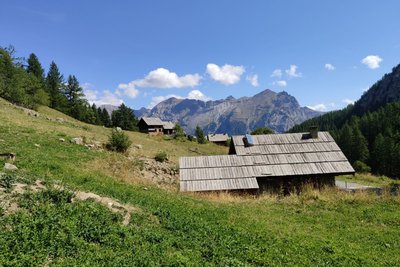
Hameau de Narreyroux - Hameau de Narreyroux Vernacular heritageThe hamlet of Narreyroux
A former alpine pasture hamlet, the hamlet of Narreyroux has maintained its charm even though most of its restored houses are now second homes. Higher up, the valley of Narreyroux is still a big alpine pasture. The pastoral cabin in which the shepherd stayed at the beginning and end of the summer grazing season, is located in the hamlet.
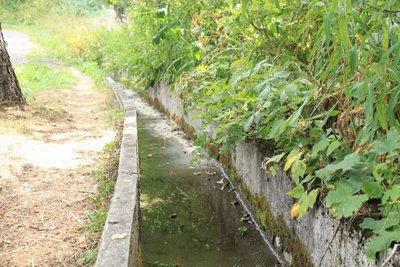
Les canaux d'irrigation - Office de tourisme du Pays des Écrins Vernacular heritageThe irrigation canals
The route follows a canal side for a short distance. Numerous canals brought water from the Torrent de la Combe mountain stream to the fields which take up a large area around the villages of Puy-Saint-Vincent. In fact, the slopes just above these fields did not provide sufficient water, making it necessary to create this large network of irrigation canals.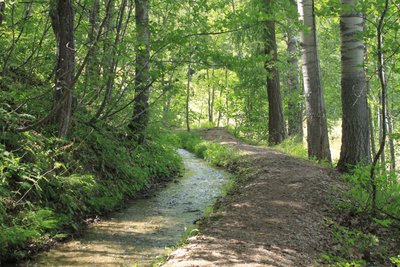
La restauration des canaux - Office de tourisme du Pays des Écrins HistoryThe restoration of the canals
Water is essential to farming in our territory because of the relatively dry Mediterranean climate with hot summers. To compensate for this, our ancestors created artificial water courses, the canals. These performed a dual role because they served not only to irrigate the hay meadows, kitchen gardens and grain fields, but also to prevent torrential flooding by acting as drains. Today, the canals are still used and managed by associations which work to keep them operational and to maintain them, several times a year.