
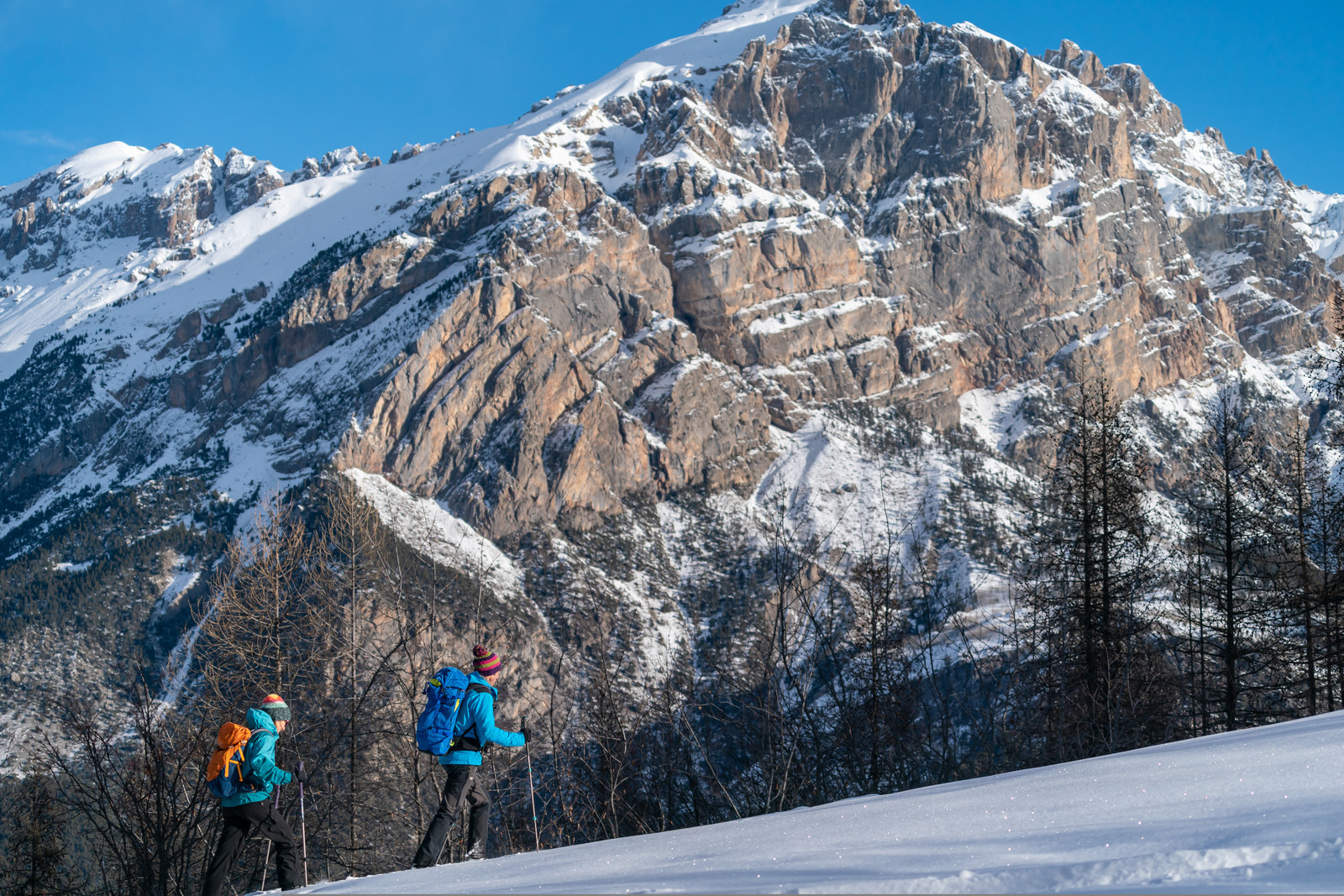
Star-shaped stay – 3 days of self-guided snowshoeing in the Écrins region
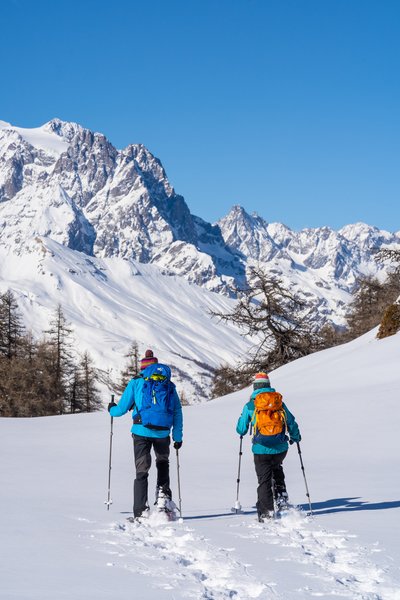
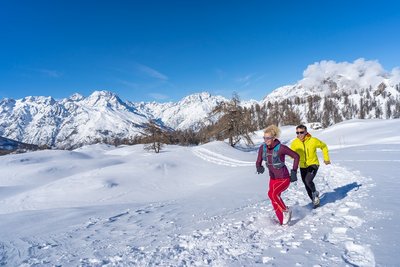
Three days of escape on snowshoes in the heart of the Écrins: larch forests, wild valleys, and endless panoramas unfold before you. The white breath of the mountains leads the way—between silence, light, and a renewed sense of freedom.
Description
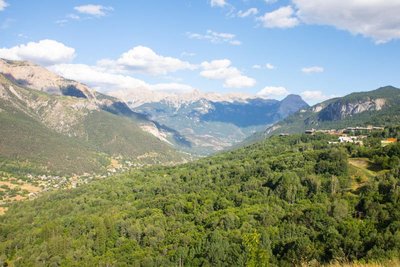
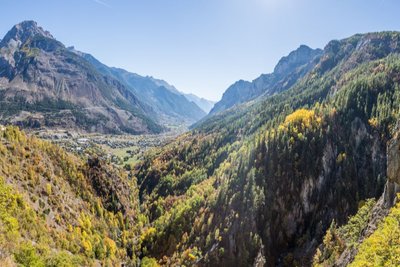
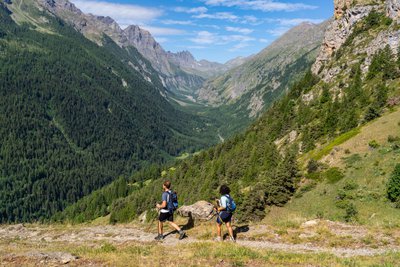
Day 1 – Tournoux Loop: This first loop offers a magnificent panorama over the Vallouise valley, your playground for the coming days. Along the way, you might be lucky enough to see a team of sled dogs passing nearby.
Ascent: 235 m / Distance: 6.5 km / Duration: 4 hrs
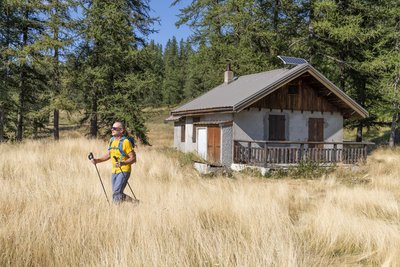
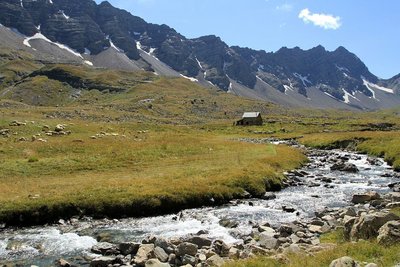
Day 2 – Narreyroux Loop: You’ll explore the wild Narreyroux valley—a unique chance to make your own trail while spotting tracks of mountain wildlife. The route leads to a charming alpine hamlet, perfect for a picnic break. Crossing meadows and forests, this day’s journey offers a wonderful variety of landscapes to enjoy throughout your hike.
Ascent: 490 m / Distance: 9.9 km / Duration: 5 hrs 30
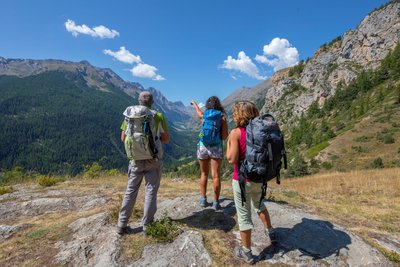
Day 3 – Les Têtes / Col de la Pousterle: Immerse yourself among the giants of the Écrins range as you climb to the summit of Les Têtes de Puy Saint Vincent. From the top, a breathtaking 360° view reveals the Écrins and Queyras massifs in all their glory. Accessible only by cross-country skis or snowshoes, this itinerary takes you through a superb larch forest. As you gain elevation, you’ll find yourself in a Scandinavian-like atmosphere, surrounded by majestic mountain scenery.
Ascent: 500 m / Distance: 9.7 km / Duration: 6 hrs
- Towns crossed : L'Argentière-la-Bessée, Les Vigneaux, Puy-Saint-Vincent, and Vallouise-Pelvoux
Les 3 parcours à découvrir
Sensitive areas
Short-toed snake eagle
- Impacted practices:
- Aerial,
- Sensitivity periods:
- MarAprMayJunJulAugSep
- Contact:
- Parc National des Écrins
Julien Charron
julien.charron@ecrins-parcnational.fr
Golden eagle
- Impacted practices:
- Aerial, , Vertical
- Sensitivity periods:
- JanFebMarAprMayJunJulAug
- Contact:
- Parc National des Écrins
Julien Charron
julien.charron@ecrins-parcnational.fr
Golden eagle
- Impacted practices:
- Aerial, , Vertical
- Sensitivity periods:
- JanFebMarAprMayJunJulAug
- Contact:
- Parc National des Écrins
Julien Charron
julien.charron@ecrins-parcnational.fr
Golden eagle
- Impacted practices:
- Aerial, , Vertical
- Sensitivity periods:
- JanFebMarAprMayJunJulAug
- Contact:
- Parc National des Écrins
Julien Charron
julien.charron@ecrins-parcnational.fr
Peregrine falcon
- Impacted practices:
- Aerial, Vertical
- Sensitivity periods:
- FebMarAprMayJun
- Contact:
- Parc National des Écrins
Julien Charron
julien.charron@ecrins-parcnational.fr
Black grouse - winter
- Impacted practices:
- , Land
- Sensitivity periods:
- JanFebMarAprDec
- Contact:
Black grouse - winter
- Impacted practices:
- , Land
- Sensitivity periods:
- JanFebMarAprDec
- Contact:
- Parc national des Ecrins - 0492402010
Black grouse - winter
- Impacted practices:
- , Land
- Sensitivity periods:
- JanFebMarAprDec
- Contact:
Black grouse - winter
- Impacted practices:
- , Land
- Sensitivity periods:
- JanFebMarAprDec
- Contact:
- Parc national des Ecrins - 0492402010
Black grouse - winter
- Impacted practices:
- , Land
- Sensitivity periods:
- JanFebMarAprDec
- Contact:
ONF 05 - Maillet Thierry
Black grouse - winter
- Impacted practices:
- , Land
- Sensitivity periods:
- JanFebMarAprDec
- Contact:
ONF 05 - Maillet Thierry
Recommandations
→ You follow these routes under your own responsibility.
Never go out alone, or at the very least, inform someone of your plans and route beforehand.
Leaving the marked trail is strongly discouraged—it may compromise your safety and is at your own risk.
Do not rely on existing tracks left by other hikers for navigation; use only the official directional signs and markers.
You are moving through a fragile natural environment—please help protect it by staying on marked paths and taking all your waste back with you.
Check the weather forecast and avalanche risk published by Météo France before setting out.
Be aware that weather in the mountains can change rapidly. If visibility deteriorates, turn back and postpone your outing.
Avoid approaching wildlife if you encounter any—additional stress or movement can threaten their survival through the winter.
You can also seek advice from local tourist offices or the Nordic chalet before departure.
Emergency number: 112
Information desks
23 Avenue de la République, 05120 L'Argentière-La Bessée
Place de l'Eglise, 05340 Vallouise

Station de Ski de Pelvoux, 05340 Vallouise-Pelvoux
50 points of interest
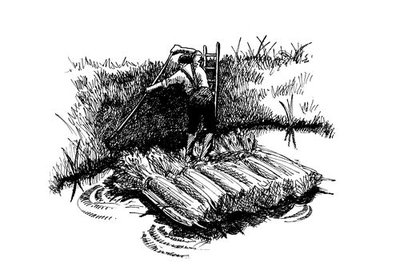
Rouissage du chanvre - PNE  Know-how
The chenevières, hemp fields
There is a French saying «Avril donne le fil», meaning that April is string time. Sown in spring after the last frosts, the tall stems of hemp grow in tiny plots of ground, called chenabiers or chenevières. The hemp is cut at the end of August and the strands are immediately immersed in large holes filled with water - called the naïs - on the edge of wet meadows. They are left to steep for more than a month, in order to release all the gum that binds the plant fibres together.
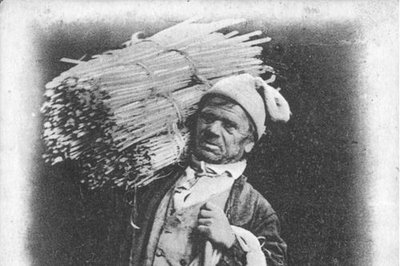
Paysan des hautes vallées - PNE Know-howHemp production
At one time, almost every winter evening would be taken up by stripping the fibre from the hemp straw. The strands had to be broken one by one, to remove the long, flexible filaments. Once washed and combed, these «balls» of hemp were taken to the rope and yarn spinners to be turned into rope, blankets and cloth for garments. When a family ordered cloth from the weaver, the entire family would go to the loom to attach the threads onto the warper.
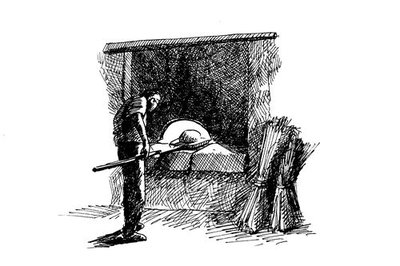
Le four banal - PNE  Architecture
The commons
As «crosswise» as it might be, from end to end the main street of Puy-Saint-Vincent has every building the community needs. The mill is still here, complete with its intake and outlet mill races. The communal oven is lit on 14 July every year. It has just been restored and shares the little paved square with a lovely water fountain, made from wood and ringed with iron.
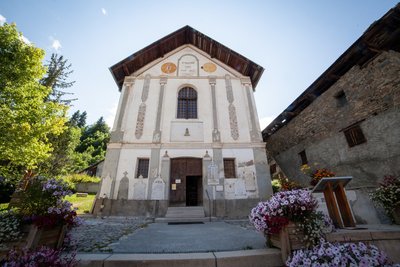
L'église Sainte-Marthe - Marie Lachaud  History
The church of Sainte-Marthe
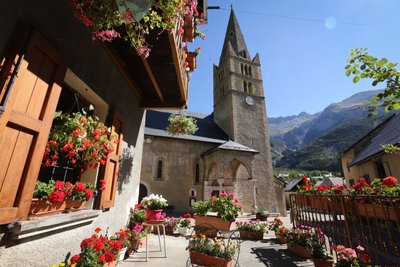
The church of Sainte-Marthe was built in the nineteenth century, in 1817 to be precise, as indicated at the top of the pediment. The inside and the main facade has a painted decoration. On two superimposed levels and on the gables, pilasters or false pillars frame either bay windows illuminating the nave, or panels painted with a false marble decoration. A few steles remind us of the present of the former cemetery. Included on the Supplementary Inventory of Historical Monuments, this church also contains a commemorative plaque honouring those who fell in the First World War.
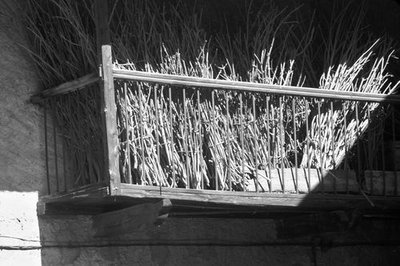
Séchage des fagots au balcon - PNE ArchitectureSolid architecture
Originally, the environment of the high valleys of the Pays des Écrins offered little space, in which men and animals cohabited. Unlike in Vallouise, where the architecture is a harmonious blend of arcades and decorative elements, the houses in Le Puy retain the rusticity of completely stone-built single block construction with half-hipped roofsprotruding over a drying balcony. This roof extension protects the main facade from bad weather, snow in particular. People can move about under shelter and the firewood store stays dry all winter. This barrel vaulted porch, which shelters the entrance to the main building and the stable, mirrors the Champsaur-Valguademar, «toune» (ground level arcade).
 Architecture
Protective shelter
Separate from the main building and at a distance from the barn, some property owners also have a small building providing safety from the much feared home fires. Here, in the coolness of this outside cellar, they stored ham, cheeses, flour, salt and other foodstuffs, but also whatever the family owned by way of valuables.
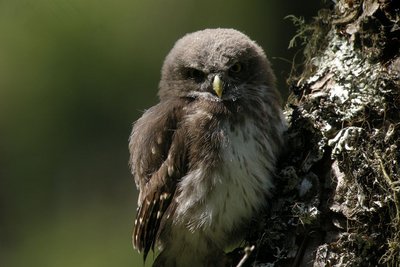
Jeune chouette chevêchette - Damien Combrisson - Parc national des Écrins  Fauna
FaunaThe Eurasian pygmy owl
The call of this small, nocturnal bird of prey can be heard in the spring, and also in the autumn when it can utter some peculiar sounds. Active during daytime hours and at dusk, the pygmy owl is a predator of passerine birds and small forest rodents. But when they spot it, passerines will come together in large numbers to mob it, so as to prevent any attempted surprise attack. It is restricted to mountain forests where it seeks out trees with woodpecker cavities in which it builds its nest.
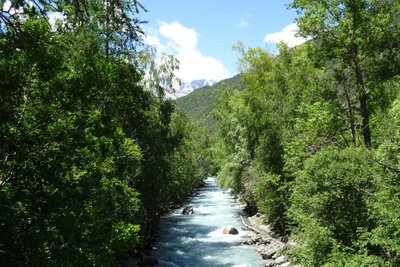
La Gyronde - Office de tourisme Pays des Écrins  Water
WaterThne Gyronde
No, we're not in south-west France where the Gironde flows! The Gyronde (spelt with a «y»!) is the river that flows between Vallouise and L'Argentière-La Bessée, where it flows into the Durance. It originates from the Gyr and Onde mountain streams which merge in Vallouise.
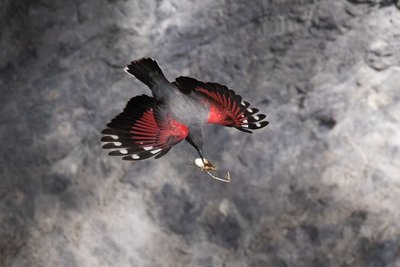
Tichodrome échelette - Pascal Saulay - Parc national des Écrins FaunaCliff-dwelling birds
The cliff is home to a variety of birdlife. The raven, not to be confused with the crow, frequently nests here. He makes an uncomfortable housemate with the peregrine falcon, a bird in sharp decline and still a vulnerable species. It, too, favours this cliff, which offers plenty of potential nesting holes. The wallcreeper, also known as the butterfly bird, also finds this a good nesting spot. Some climbing routes are closed during this bird's breeding season.
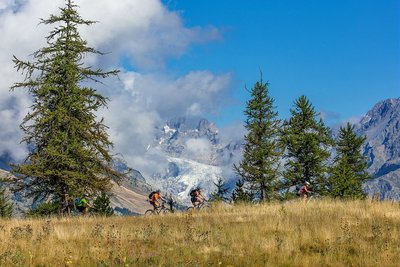
Col de la Pousterle - Bertrand Bodin - Parc national des Écrins  Pass
PassThe Col de la Pousterle
A pousterle (in the local high-alpine Occitan language) is a small gate, a postern. It comes from the Latin posterula which means back door. This place name is sometimes given to a pass, which could be described as a gateway between two valleys! The glaciers carved out this gateway through which an arm stretched between the glacier occupying the Fournel valley and the glacier flowing down the Vallouise valley.
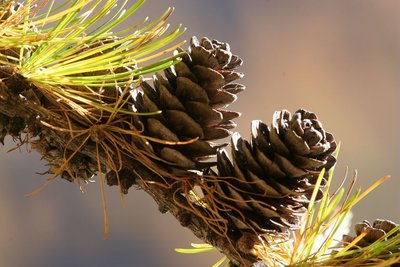
Mélèze avec cônes - Robert Chevalier - Parc national des Écrins  Flora
FloraThe larch
The symbol of the Southern Alps, this softwood tree loses its leaves in winter, and is swathed with gold and lights up the mountains in autumn. The larch forests are maintained by the grazing of flocks. Without them, other trees like the fir or other pine trees could grow, creating a different kind of forest. A pioneer species, the larch establishes freely in light conditions. Its solid rot-proof wood has always been used in the construction of houses.
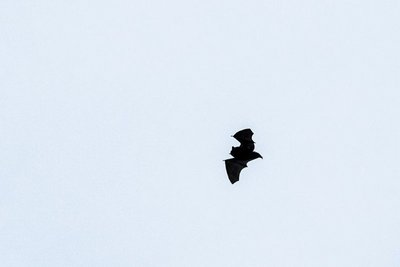
Chauve-souris en vol en contre jour - Mireille Coulon - Parc national des Écrins FaunaForest-dwelling bats
Bats don't just live in caves! In summer, some forest-dwelling species shelter in old hollow trees or woodpecker holes during the day. Sometimes, the females also form little colonies here, where their young will be born (one bat pup per female). In this forest, which is still young with very few old trees, artificial roosts have been installed to help the bats and to facilitate their study.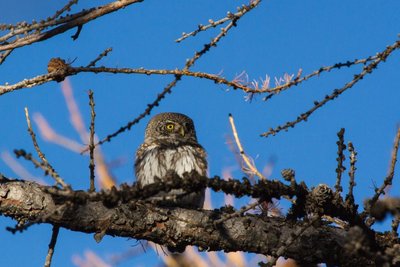
La chouette chevêchette - Christophe Albert - Parc national des Écrins FaunaThe pygmy owl
The call of this small, nocturnal bird of prey can be heard in the spring, and also in the autumn when it can utter some peculiar sounds. Active during daytime hours and at dusk, the pygmy owl is a predator of passerine birds and small forest rodents. But when they spot it, passerines will come together in large numbers to mob it, so as to prevent any attempted surprise attack. It is restricted to mountain forests where it seeks out trees with woodpecker cavities where it builds its nest.
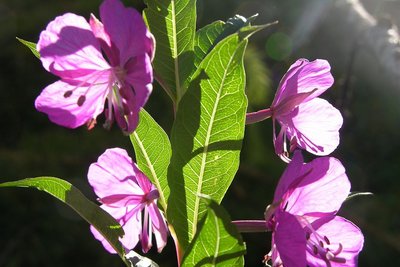
Epilobe en épis - Thierry Maillet - Parc national des Écrins FloraThe rosebay willowherb
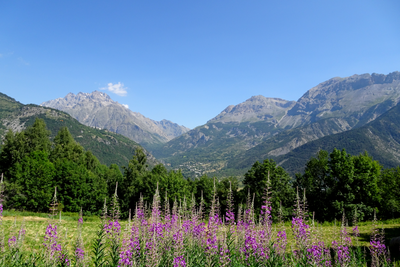
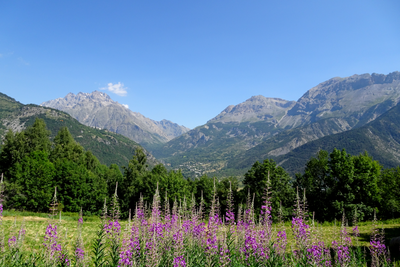
The forest tracks are edged with great swathes of a tall plant which has purple flowers arranged in loose spikes. The rosebay willowherb is a pioneer plant and favours road embankments and disturbed ground. In late summer, its very numerous seeds, each with a little plume, float away en masse glowing in the advancing twilight…
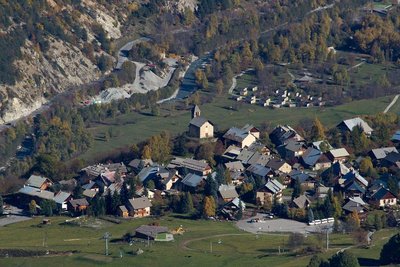
Vue sur Puy Saint Vincent - Christophe Albert - Parc national des Écrins HistoryThe Sentier du Facteur - the postman's path
In former times, the postman would take this path every day: He would set out from Vallouise, deliver letters in Puy-Saint-Vincent and drop back down to Vallouise, stopping at the hamlets of Parcher on the way. In the winter, when the snow was too deep, the Traversouires (the inhabitants of Puy-Saint-Vincent) donned their snowshoes and wielded their shovels to clear the postman's path down to Vallouise.
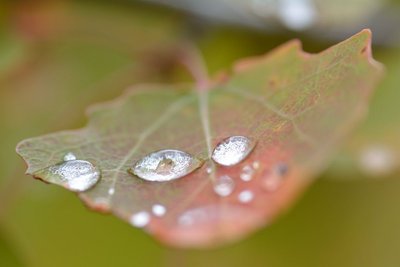
Gouttes d'eau sur feuilles de tremble - Mireille Coulon - Parc national des Écrins FloraThe aspen
Near the ruined mill, you can see a stand of tall trees with smooth, greenish trunks and rounded, crenelated leaves which take on magnificent colours in autumn. The stem, or petiole, of aspen leaves is flat and twisted, so it can be caught by the slightest breeze making the foliage «quake» hence its common name, the quaking aspen. It needs dampish soils and plenty of light and so it grows in clearings.
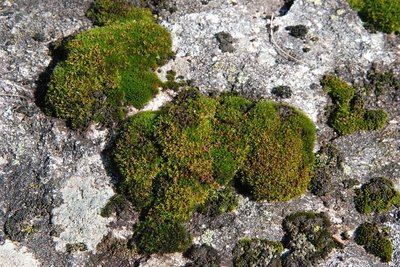
Mousses sur roche - Dominique Vincent - Parc national des Écrins FloraMosses
There are mosses growing on the old wall. Mosses are plants which appeared long before flowering plants, 440 million years ago. They live in damp environments but can withstand long periods of drought. They have very few requirements and can colonise virgin areas. They then contribute to the slow formation of humus, thus allowing more demanding plants to establish in their turn. There are 800 species of moss in France, all of them beautiful!
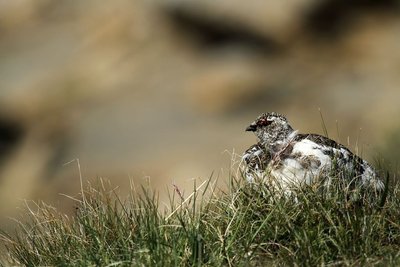
Lagopède alpin en été - mâle - Jean-Philippe Telmon - Parc national des Écrins FaunaThe ptarmigan and the mountain hare
The rock ptarmigan, a member of the grouse family, and the mountain hare are both perfectly adapted to high-altitude life. Among other adaptations, they turn white in winter in order to escape the attention of predators, and they are grey-brown in summer. In addition, their feet are covered with feathers or fur, and act as snowshoes when moving over snow. They are particularly threatened by the increasingly early arrival of the flocks in the alpine pastures, the boom in winter tourism and climate change.
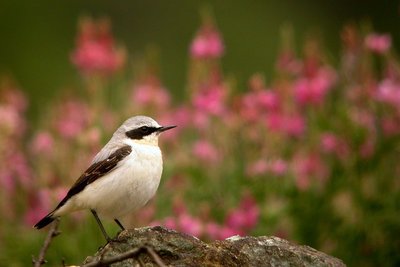
Le traquet motteux - Damien Combrisson - Parc national des Écrins FaunaThe wheatear
This bird is common in the alpine pastures and can be recognised by its grey back, its pale underside, its white rump, its white tail the shape of an inverted black "T" and by a black stripe over its eye. During the mating season, the male's underside is pinkish. Perched on a large rock, he utters a loud «uit uit» alarm call, which gives his presence away. A migratory bird, he arrives from Africa in April and flies south again in September.
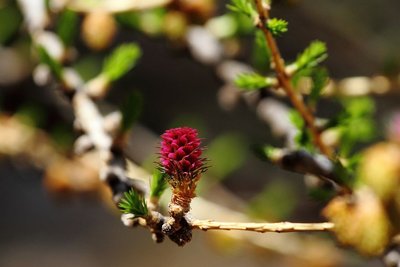
Mélèze en fleur - Christophe Albert - Parc national des Écrins FloraThe larch forest
The symbol of the Southern Alps, this softwood tree loses its leaves in winter. Perfect adaptation to winters in the high mountains: being leafless, the branches are better able to withstand the weight of the snow. Arranged in little clusters, the leaves are a soft green in the spring and golden yellow in the autumn. It is a pioneer species which needs light in order to grow. It provides mankind with a source of pasture for the flocks and a strong and rot-proof construction material.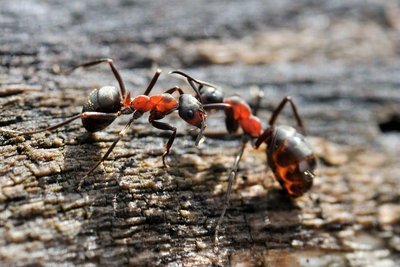
La fourmi rousse des bois - Mireille Coulon - Parc national des Écrins FaunaThe red wood ant
The nest of the red wood ant is made from conifer needles, dry grass and earth. It is home to between 200,000 and 500,000 ants! It gives of an odour of vinegar, due to the formic acid, a substance sprayed by the ants as a defensive mechanism. Inside the nest, the worker ants each have their own task. In early summer, a large number of winged ants fly from the nest: these are males who will only live for a few days, enough time to reproduce, and a few new queens.
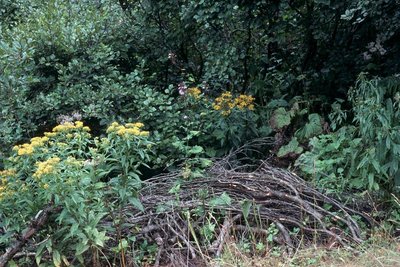
Adénostyles à feuilles d'alliaire et séneçons de Fuchs dans la mégaphorbiaie et l'aulnaie verte - Bernard Nicollet - Parc national des Écrins FloraThe "megaphorb"
The "megaphorb" is a combination of mega-plants which establish themselves in places where the soil is permanently damp, deep and nutrient-rich. The adenostyles alliariae, the alpine sow-thistle, the masterwort or false benjoin and the tansy-leaved rocket are among them.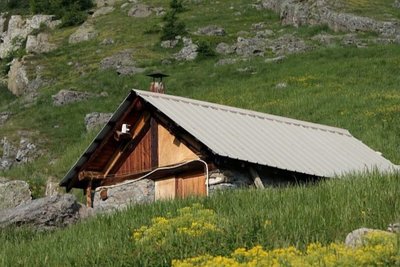
Cabane de Narreyroux - Thierry Maillet - Parc national des Écrins  Vernacular heritage
The mountain habitat
The houses here were once built with local materials: stone and larch wood. They are roofed with shingles rather than the lauze (flat stone) commonly seen in other mountain regions. The hamlet of Narreyroux was a high mountain hamlet within the the municipality of Puy-Saint-Vincent. In fact, one of the chalets is still used as a shepherd's cabin, before the flock moves up the valley floor where the Grands Plans shepherd's cabin is situated.
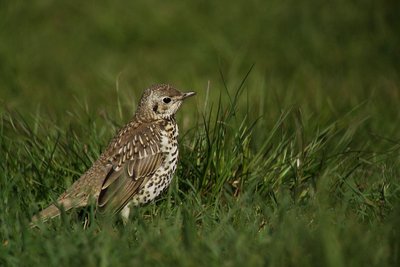
Une grive - Damien Combrisson - Parc national des Écrins FaunaThrushes
In the springtime, the woods echo with the song of birds seeking a mate and defending their territory. Among them is the song of the mistle thrush, similar to that of the blackbird, melodious and piping. As for the song thrush, it has a wide and varied repertoire: its song is a succession of powerful varied notes, each repeated numerous times. In summer, the birds are more inconspicuous: when raising young, there's no point in singing for a mate, better not to attract attention!
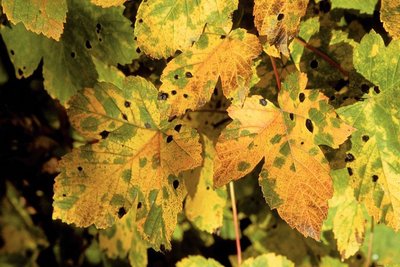
L'érable sycomore - Bernard Nicollet - Parc national des Écrins FloraThe sycamore
The sycamore is a beautiful tree. Its leaves have five rather pointed lobes, similar to those of the plane tree. It cannot tolerate drought, so it grows in this region in relatively cool deciduous forests. Its twin fruits, equipped with wings, twist as they fal: the «helicopters» that children love. In autumn, its leaves turn golden yellow creating a delightful sight.
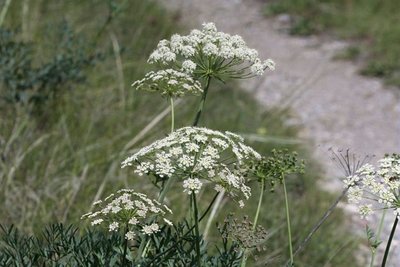
Le laser siler - Cédric Dentan - Parc national des Écrins FloraThe laserwort
After the bridge, a large plant with flowers arranged in umbels (in other words, an umbellifer) clings to a small rock bar to the right of the track, the laserwort. This plant belongs to the family Apiaceae, which used to be called umbellifers, and grows in dry areas. It has a distinctive feature: in autumn, the basal part of the stem breaks of its own accord and the entire plant, now dry, sets off rolling down the hillside like a large ball, or is blown by the wind.
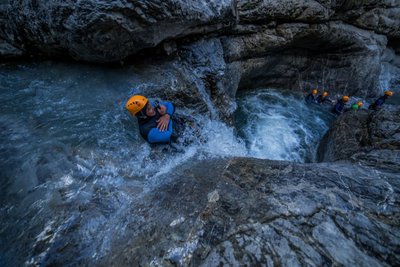
Canyoning - Fournel - Jan Novak Photography WaterThe Fournel
The Fournel mountain stream gives generously. Its water makes up a large proportion of the town's drinking water, supplies the irrigation canals, is used for hydropower and offers a recreational area valuable to the local economy in the form of its canyon, located in the gorge connecting it to the Durance. Being a mountain stream, it is impetuous, but sills have been built lower down and it has been dammed to prevent natural disasters. Numerous mountain streams have received the same treatment…
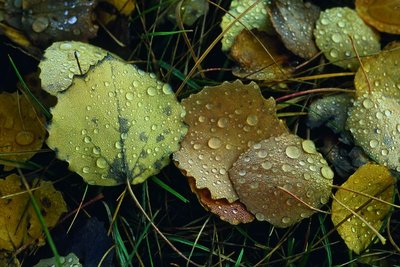
Des feuilles de tremble - Bernard Nicollet - Parc national des Écrins FloraThe aspen
A sizeable aspen grows on the roadside, on the edge of a small wood of fellow-aspens. This tree has a smooth, greenish trunk and rounded, crenelated leaves which take on magnificent colours in autumn. The stem, or petiole, of aspen leaves is flat and twisted, so it can be caught by the slightest breeze making the foliage «quake» hence its common name, the quaking aspen. It grows in places where the soil is quite damp.
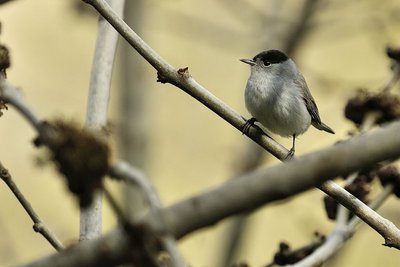
Fauvette à tête noire - Mireille Coulon - Parc national des Écrins FaunaThe Eurasian blackcap
Hidden in the tree foliage, the Eurasian blackcap announces its presence with its loud and piping song. Its head is adorned with a cap which is black in the male and russet in the female. The rest of its plumage is greyish, its underside lighter than its back. It is a migratory bird which travels to the Maghreb to overwinter. However, increasing numbers of birds make only a partial migration, flying to the south of France to spend the winter.
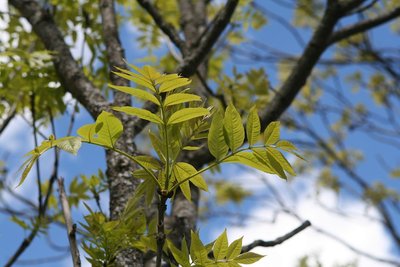
Un frêne élevé - Marie-Geneviève Nicolas - Parc national des Écrins FloraThe ash tree
This is one of the most common trees, provided the ground is relatively cool. It is characterised by its pinnate leaves, that is to say, made up of several segments, and in winter is can be recognised by its large black leaf buds. The ash was extremely important in times past: its foliage was used to feed cattle and its hard, flexible wood was used to make a variety of objects such as tool handles.
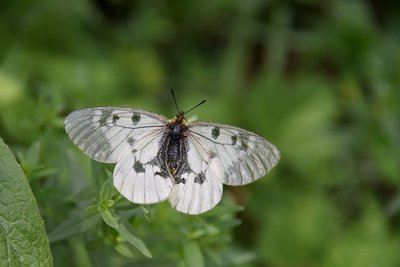
Le semi-apollon - Mireille Coulon - Parc national des Écrins FaunaThe clouded Apollo
This butterfly with hyaline (glass-like) translucent white wings, marked with two black spots, flutters around the clearing or the edges of the forest, where the host plants of its caterpillars grow: the corydalis. Although abundant locally, it is nevertheless a species in sharp decline and is protected.
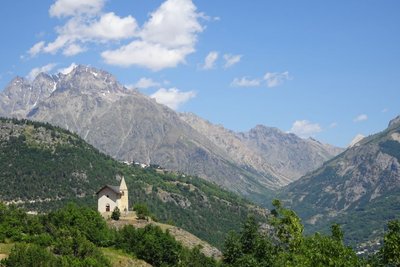
La chapelle Saint-Romain - Office de tourisme Pays des Écrins HistoryThe chapel of Saint-Romain
Included on the Supplementary Inventory of Historical Monuments in 1931, the chapel of Saint-Romain has been converted into an eco museum. It was the first chapel to be built in Puy-Saint-Vincent and is thought to date from the twelfth century. Up to the mid-fifteenth century, the village bore the name of its patron saint: Puy-Saint-Romain. Then, in honour of the arrival of the Dominican monk Vincent Ferrier, the village took the name Puy-Saint-Vincent. It stands on a rocky promontory outside the village, and offers a panoramic view over the Les Écrins massif and the Gyronde Valley, over Vallouise in particular.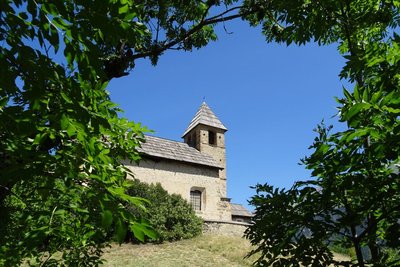
La chapelle Sainte Marie Madeleine - Office de tourisme Pays des Écrins HistoryThe church of Sainte-Marie-Madeleine-des-Prés and its two sun dials
The charming little church of Sainte-Marie-Madeleine-des-Prés, which dates from the sixteenth century, stands in the hamlet of Les Prés. It is surrounded by a wall and a cemetery. On the walls of the church, two sun dials can be seen, both engraved and painted on plaster in 1718. The first is above the door, telling the time in the afternoon, bearing the saying « for a moment of delights, an eternity of torments » which alludes to the life of Saint Mary Magdalene, the well-known sinner who is venerated as a model of penitence. The second, telling the time in the morning, bears the Latin phrase Ars longa, vita brevis which translates as« learning is long, life is short ».
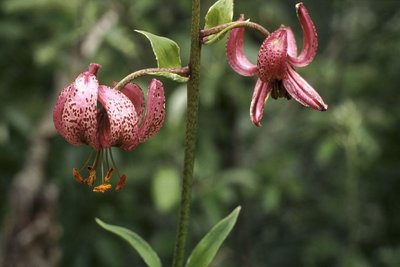
Le lis martagon - Marie-Geneviève Nicolas - Parc national des Écrins FloraThe martagon lily
In cooler spots, the path is edged by large plants such as the wood cranesbill, which has purple flowers, and the martagon lily. This superb plant has large hanging flowers with curved-back petals, which are pink speckled with purple and exposed orangey stamens. Its leaves are elongated and whorled. It grows in meadows and cool woods. Although common here, it is rare in many French regions. In fact, picking it is prohibited or regulated.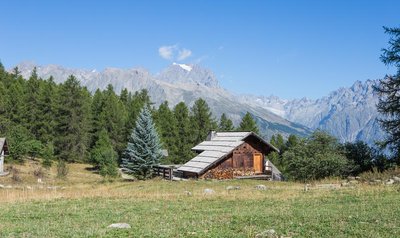
Chalet - Jan Novak  Panorama
Tournoux
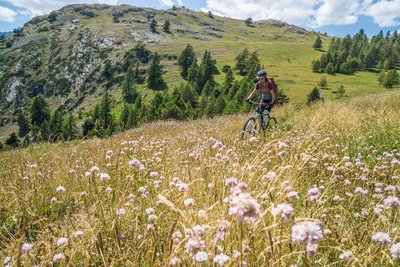
The Tournoux plateau is a small paradise with its cool meadows, its occasional renovated chalets made from stone and larch wood and its view over the Tête d'Aval, an imposing limestone peak forming part of the Montbrison massif. Whether on a mountain bike, on foot or on cross-country skis in the winter, this spot is always an invitation to stop for a break!
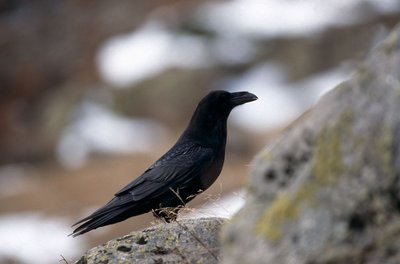
Le grand corbeau - Chevalier Robert - Parc national des Écrins FaunaThe common raven
A hollow "caw" makes you lift up your head (careful not to trip!). A pair of common ravens is nesting near here (they pair for life), on a cliff face. Although bigger than its cousins the carrion crow and the rook, it can be identified by its rather lozenge-shaped tail. It almost became extinct due to persecution Yet it's an omnivore and, more particularly, a scavenger which plays an important role by cleaning up disease-prone carcasses.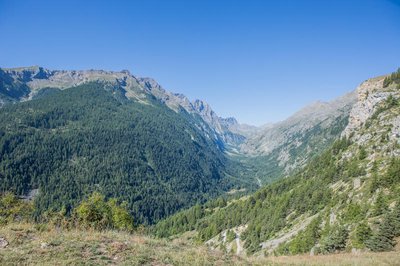
Vallon du Fournel vu du Col de la Pousterle - Jan Novak PanoramaThe Fournel valley
This is the southern side of the Col de la Pousterle and its view over the very long Fournel valley, known for its mines, ice waterfalls, blue thistles, its canyon and other treasures. Lower down is L'Argentière-la-Bessée. At the highest point, right in the distance, is the Champsaur!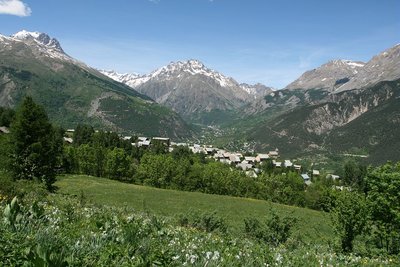
Hameau des Prés - Marie-Geneviève Nicolas - Parc national des Écrins HistoryLes Prés, hamlet of Puy-Saint-Vincent
Le Prés is one of the main hamlets of Puy-Saint-Vincent. Like Le Puy and Les Alberts, it stands on a flat plateau which is a glacial escarpment left by the now-retreated Gyronde glacier. Like Prey d'Aval, Prey du Milieu and Prey d'Amant, its name is a reminder that prior to the development of the ski resort, the land here used to be shared by meadows and crops.
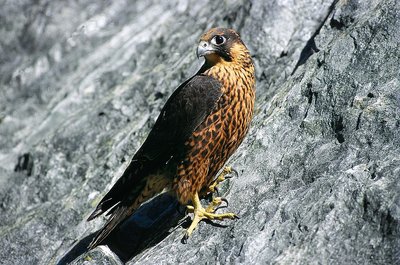
Faucon pèlerin - Fiat Denis - Parc national des Écrins FaunaThe peregrine falcon
Cries echo around the cliffs. A pair of peregrine falcons nests there regularly. A real "fighter plane" with tapered wings, it is a formidable predator of pigeons and other birds. It came very close to extinction because of pesticides, but it remains endangered because the eggs are still stolen for the falconry trade, even though it is a protected species. It is also sensitive to disturbance. Climbers are urged not to climb in this area in the spring.
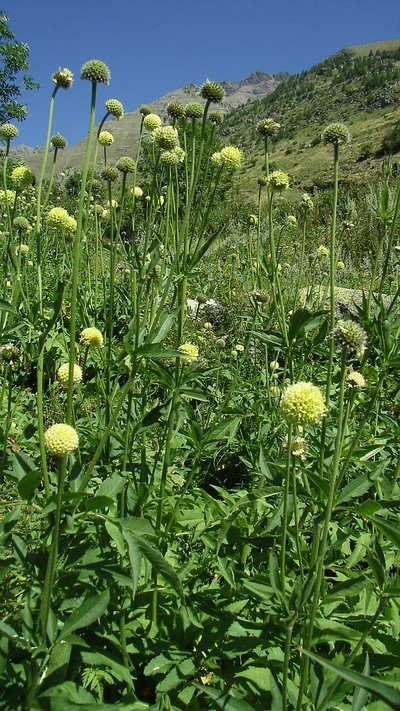
Céphalaire des Alpes - Marie-Geneviève Nicolas - Parc national des Écrins FloraThe yellow cephalaria
Rather like a tall scabious (up to 2 metres) but with pale yellow flower heads, this is not a common plant. Yet, at an intersection of two tracks, it has established on a small patch of ground. Who knows why! It is a mountain plant which only lives in the west of the Alpine Arc..
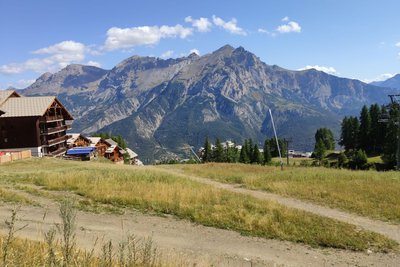
La station de Puy Saint Vincent - Office de tourisme du Pays des Écrins Vernacular heritageThe ski resort of Puy Saint Vincent
The original resort was created in Les Prés in 1968. Then,1974 saw the start of construction Grande Barre 1600, which in every respect chimes with the tourist architecture of the 1970s. The new 1800 resort, with its wood and stone chalets, dates from 2005: more modest sizes, more sympathetic materials similar to local species. It's the third generation of the resort.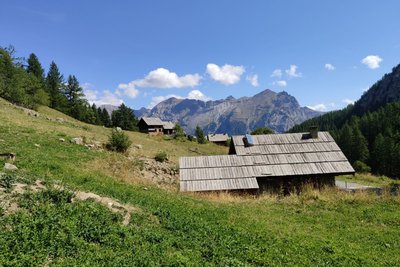
Hameau de Narreyroux - Hameau de Narreyroux Vernacular heritageThe hamlet of Narreyroux
A former alpine pasture hamlet, the hamlet of Narreyroux has maintained its charm even though most of its restored houses are now second homes. Higher up, the valley of Narreyroux is still a big alpine pasture. The pastoral cabin in which the shepherd stayed at the beginning and end of the summer grazing season, is located in the hamlet.
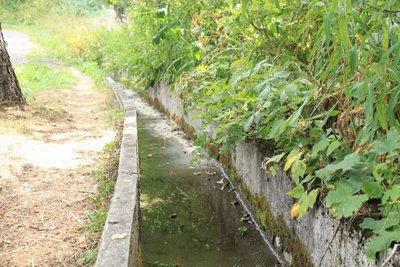
Les canaux d'irrigation - Office de tourisme du Pays des Écrins Vernacular heritageThe irrigation canals
The route follows a canal side for a short distance. Numerous canals brought water from the Torrent de la Combe mountain stream to the fields which take up a large area around the villages of Puy-Saint-Vincent. In fact, the slopes just above these fields did not provide sufficient water, making it necessary to create this large network of irrigation canals.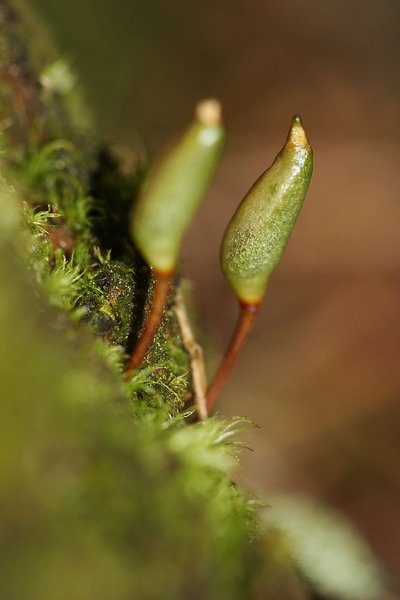
Buxbaumie verte - Combrisson Damien - Parc national des Écrins FloraGreen shield-moss
It is only after close inspection of rotting dead wood - pine or larch in the main - that you might hope to spot the very inconspicuous and rare shield-moss. It is a moss which has no leaves and only its sporophytes (tiny spore-containing sacs) give its presence away. It reaches a height of no more than 7 or 8 mm! It is rare because it can only live in ancient forest and it is severely threatened by timber exploitation, so it is an indicator of the good health of a forest. It is a heritage species, that is to say, protected at national level.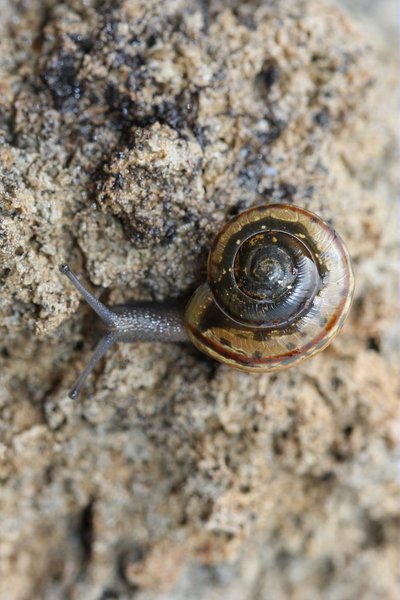
Hélicon des granites - Combrisson Damien - Parc national des Écrins FaunaThe Chilostoma zonatum flavovirens or granite helicon
No, it's a snail, not a musical instrument! This relatively rare mollusc which can reach 2 or more centimetres in diameter is seldom seen in the Pays des Écrins, but appears to enjoy living in the Fournel valley. It takes shelter among cool damp boulders which are, as its name suggests, non-calcareous... Something quite unusual for snails, whose shells are made up essentially of calcium carbonate!
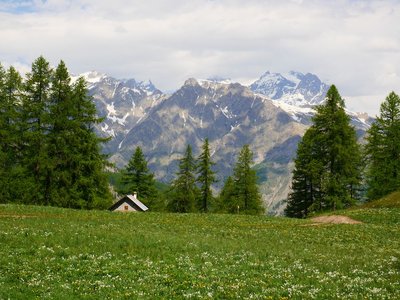
Le Laus - Marie-Geneviève Nicolas - Parc national des Écrins Vernacular heritageLe Laus
A number of old alpine pasture chalets or hamlets, often renovated, are dotted across the Puy-Saint-Vincent resort. These are the Chalets du Laus. Le Laus is a place name designating a lake. In fact, just after the chalets, although not a lake, there is a flat, marshy area which is no doubt a small filled-in lake. So no point in bringing your pedalo!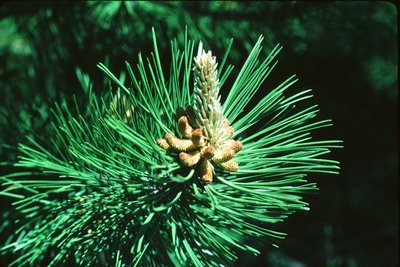
Le pin sylvestre - Parc national des Écrins FloraThe Scots pine
The path first runs up through a forest of Scots pines, a tree identifiable by its salmon-coloured bark, especially at the top, and its needles arranged in pairs. It is the typical tree of warm south-facing slopes in the montane zone of intra-alpine valleys.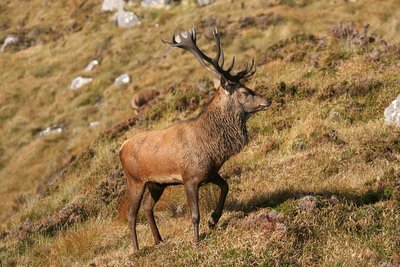
Cerf - Telmon Jean-Philippe - Parc national des Écrins FaunaThe deer
Deer are well-established across the Pays des Écrins. You can spot clues as to its presence: hoof prints or droppings, often in little piles. The stag loses his antlers at the end of winter (February-May) and they regrow up to the end of August. They reach full development before the rutting season (September), when you can hear the rutting call. The doe has no antlers.
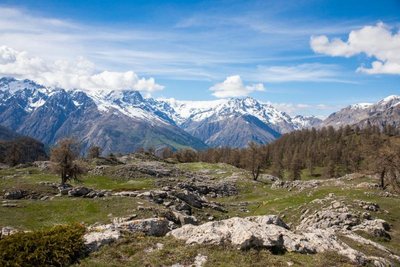
Les Têtes - Thibaut Blais PanoramaThe Les Têtes belvedere
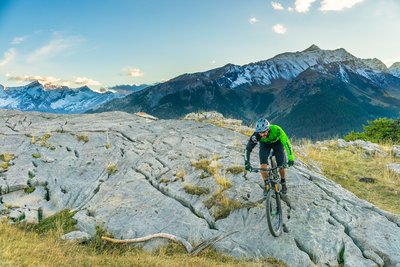
This belvedere is worth the diversion, not only for its unrestricted panorama over the Fournel and Durance valleys but also for the place itself, with its sparse mature larches and the bare limestone scored with small fissures. These were created by the erosion of the rock by cold snowmelt waters or rain.
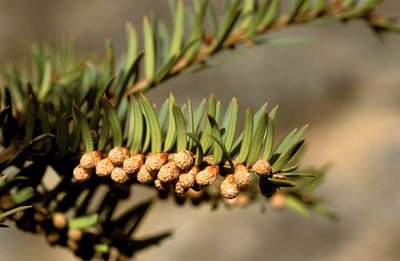
If fleurs mâles - Nicollet Bernard - Parc national des Écrins FloraThe common yew
Stands of common yew have declined significantly due to felling for wood and because of its toxicity for livestock and humans: it has been dug up or cut down in numerous regions. It has also been widely collected because it contains a cancer [fighting] agent. A large population survives in the Fournel valley and it is currently being monitored.
Access





Source